Nội dung
1. Overview of the Wastewater Evaporation Treatment System
1.1. Project Introduction
Project name:
Consulting, design, and installation of a wastewater evaporation system combined with RO technology for hazardous wastewater treatment from metal manufacturing and processing.
Location:
Former Binh Duong Province, Ho Chi Minh City, Vietnam
System capacity:
Influent flow rate of 300 liters per hour, operating 20 hours per day
(approximately 6 m³/day)
Treatment scope:
Hazardous industrial wastewater generated from metal manufacturing and metal processing plants
Project objective:
Ensure treated effluent complies with QCVN 40:2011/BTNMT – Column B
1.2 Scope of Work
Design, manufacture, and installation of the treatment system
Transportation of the system to the project site
System inspection and acceptance testing
Trial operation to verify performance and reliability
Technical documentation and operation manuals
2. Influent Wastewater Characteristics
According to the project owner, the existing RO-based wastewater reuse system generates approximately 30 m³/day of RO concentrate, which requires further treatment or reuse.
2.1 Influent wastewater design parameters
| Parameter | Unit | Design Value |
|---|---|---|
| pH | – | 7.5 – 8.5 |
| Color | Pt-Co | < 100 |
| TSS | mg/L | < 200 |
| BOD | mg/L | < 500 |
| COD | mg/L | < 20,000 |
| Ammonia | mg/L | < 100 |
| Total Nitrogen | mg/L | < 400 |
| Phosphorus | mg/L | < 50 |
| Oil & Grease | mg/L | < 200 |
| TDS | mg/L | < 10,000 |
Wastewater type: Hazardous industrial wastewater
Key challenge: High pollutant concentrations requiring advanced treatment technologies
3. Applied Treatment Technologies
The project applies the following core technologies:
High-pressure RO technology for wastewater
Wastewater evaporation technology (TVTS Evaporator)
Key advantages
Maximizes clean water recovery
Completely minimizes the risk of liquid discharge to the environment
Well suited for industries generating medium to high TDS wastewater, such as metal manufacturing and electroplating
4. Treatment Performance
Clean water recovery rate: approximately 90–95%
Treated water quality (QCVN 40:2011 – Column B)
| Parameter | Unit | Limit |
|---|---|---|
| pH | – | 5.5 – 9.0 |
| Color | Pt-Co | 150 |
| TSS | mg/L | 100 |
| BOD | mg/L | 50 |
| COD | mg/L | 150 |
| Ammonia | mg/L | 10 |
| Total Nitrogen | mg/L | 40 |
| Phosphorus | mg/L | 6 |
| Oil & Grease | mg/L | 10 |
The treated effluent meets all regulatory discharge requirements.
Key benefits
Reduces environmental pollution
Ensures compliance with environmental regulations
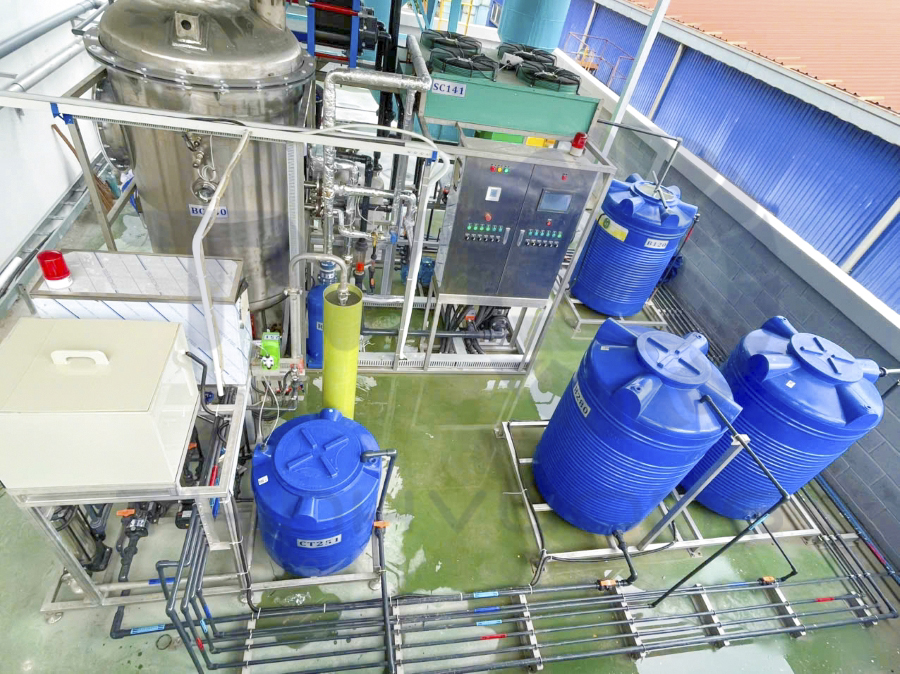
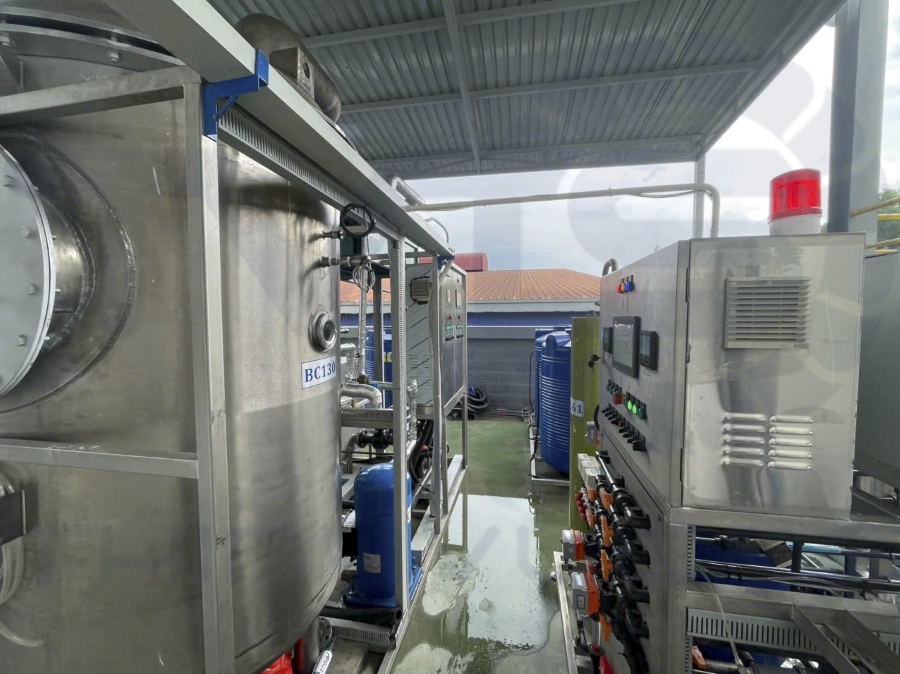
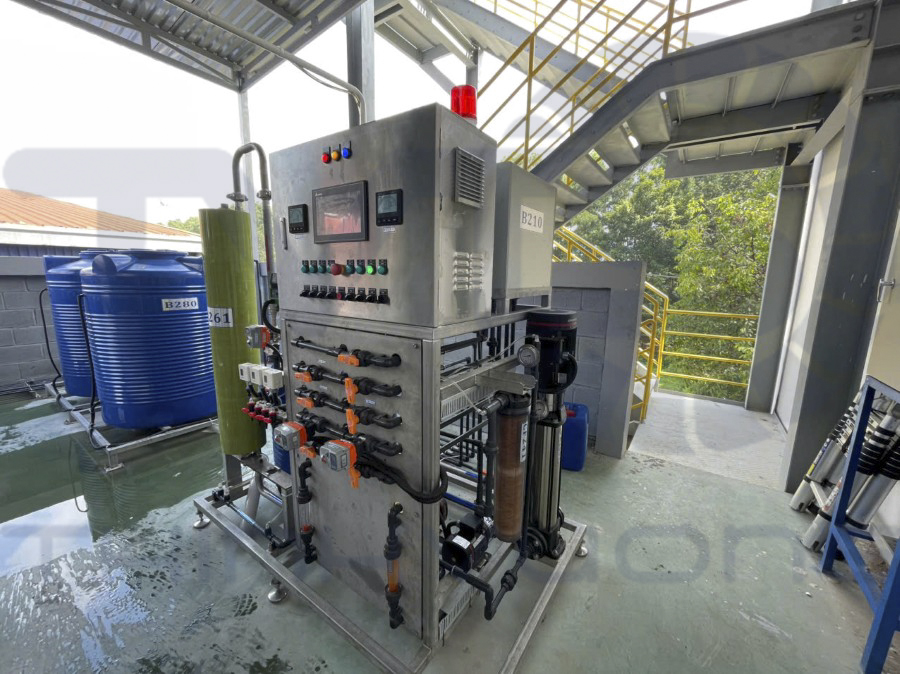
5. Actual Project Images
 |  |  |
 | 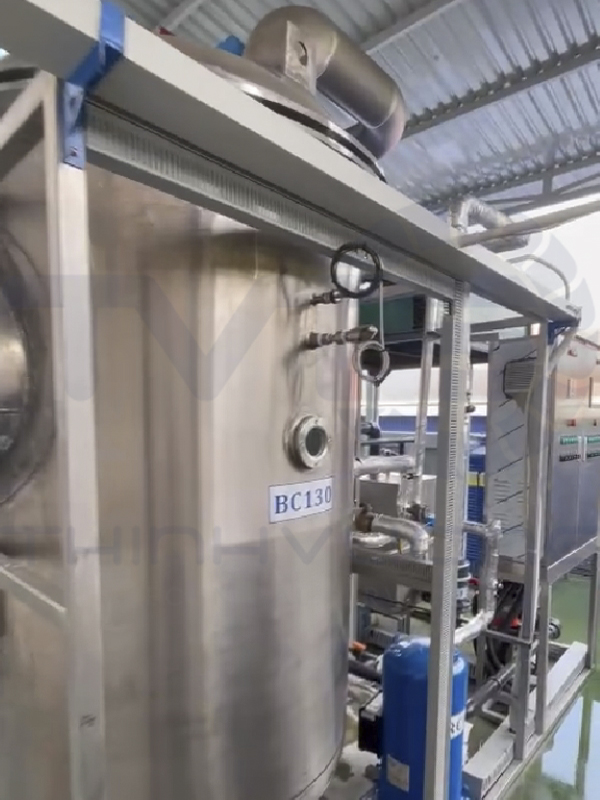 | 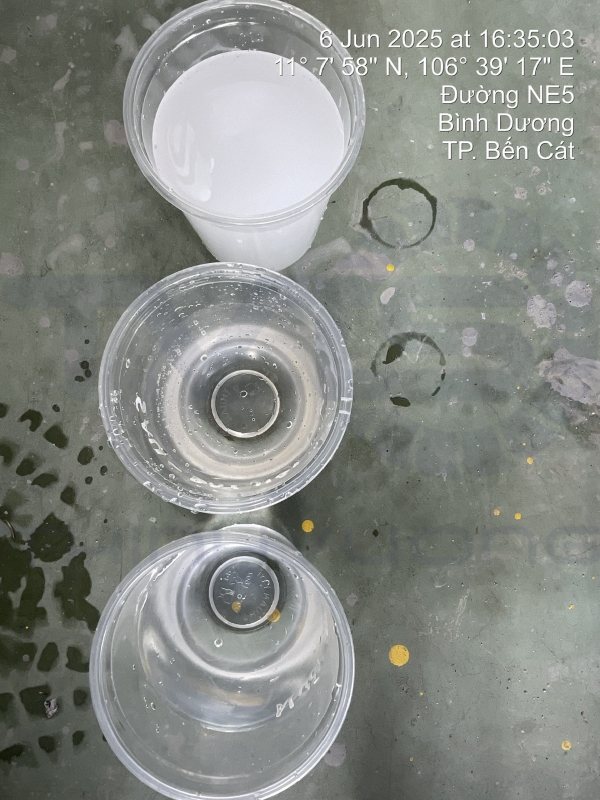 |
Wastewater evaporation treatment system with a capacity of 6 m³/day for metal manufacturing and electroplating wastewater in Binh Duong.
Why Choose a Wastewater Evaporation Treatment System?
A wastewater evaporation treatment system offers a highly efficient and cost-effective solution for industries generating hazardous wastewater, such as metal manufacturing, electroplating, and chemical processing—where conventional treatment technologies often show limitations. By concentrating contaminants and separating water under thermal and vacuum conditions, the system can recover up to 95% of clean water, while significantly reducing the volume of hazardous waste sent to external treatment facilities.
This reduction helps manufacturers lower annual costs for hazardous waste treatment, transportation, and disposal, while improving compliance with increasingly strict environmental regulations. With proven performance on medium to high TDS wastewater streams, wastewater evaporation systems play a key role in water reuse strategies and the transition toward ZLD. Based on extensive project experience, we deliver custom-engineered wastewater evaporation systems tailored to each wastewater profile, ensuring stable operation, environmental safety, and long-term economic efficiency.
Learn more about wastewater evaporation equipment