“Modular Skid-Mounted and Containerized Wastewater Treatment System – A Faster Deployment Solution for Industrial Plants”
For many years, when people talked about a wastewater treatment system, they usually imagined a project built almost entirely on site. Tanks, piping, support frames, equipment, and control panels were installed step by step and connected gradually according to the construction schedule.
Today, another approach is becoming more common around the world: the Modular Skid-Mounted and Containerized Wastewater Treatment System.
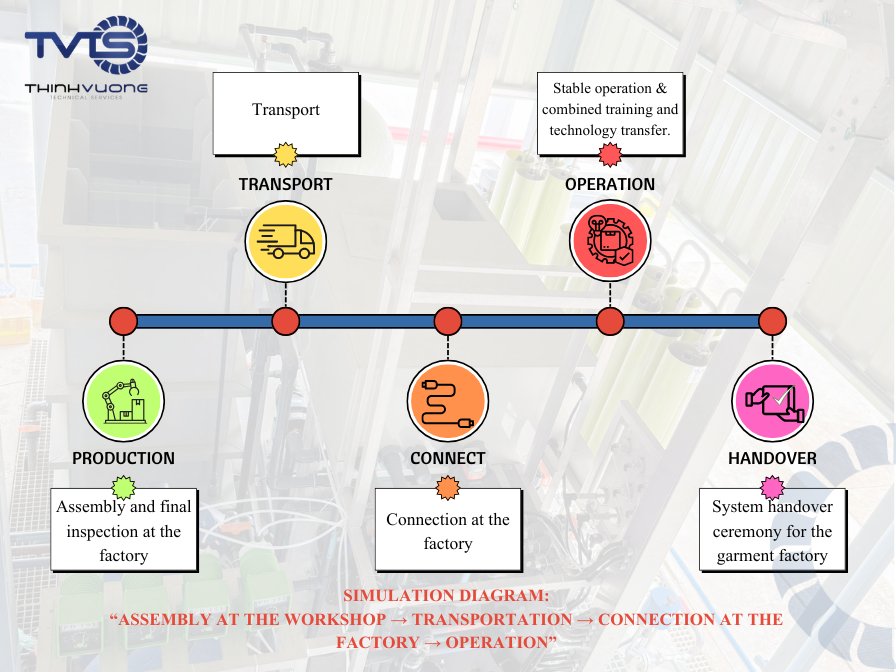
In simple terms, this model allows engineers to fabricate, assemble, complete, and test most equipment and process units in the workshop first. They then transport the system to the plant for piping connection, electrical connection, and start-up. Instead of building everything on site, the factory receives a highly integrated system that is easier to deploy and easier to control in terms of quality.
At TVTS, this is not only a different equipment arrangement. It is also a new implementation approach for projects that require fast schedules, clear work scope, compact installation, and early operation.
Nội dung
- 1. What Is a Modular Skid-Mounted and Containerized Wastewater Treatment System?
- 2. Why Does This Approach Deserve Market Attention?
- 3. Which Industries Are Suitable for This System?
- 4. What Does TVTS Want to Bring to the Market?
- 5. Is This the Right Solution for Every Project?
- 6. Why Does This Integrated Model Fit Modern Treatment Technologies?
- TVTS Provides a More Compact and More Stable Modular Treatment Approach
1. What Is a Modular Skid-Mounted and Containerized Wastewater Treatment System?
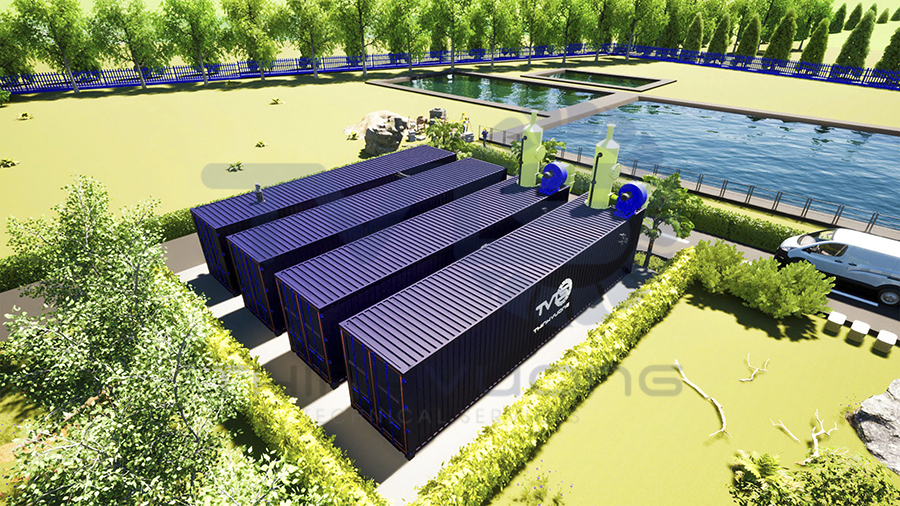
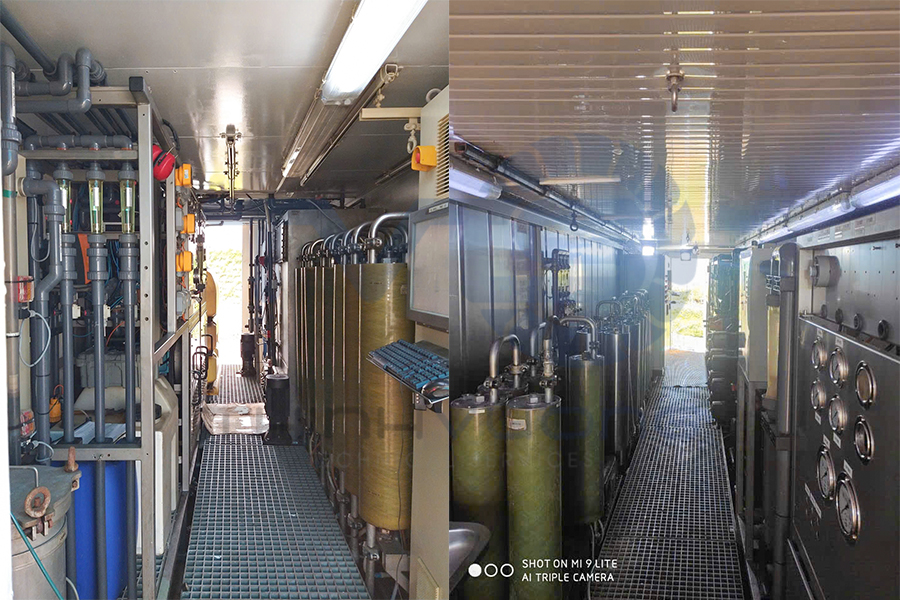
A Modular Skid-Mounted and Containerized Wastewater Treatment System organizes process units into integrated skids or places them inside mobile technical containers, depending on project goals.
A system like this usually follows these steps:
- Design by functional blocks
- Assemble equipment, piping, pumps, valves, control panels, and automation systems in the workshop
- Check mechanical works, electrical systems, control logic, and pre-commissioning items
- Transport the system to site for inlet, outlet, and power connection, then start operation
The key concept is integration. Instead of bringing separate items to site and installing them one by one, the system is built into clearly structured process units in the workshop. This makes the whole implementation process more compact, easier to understand, and easier to control.
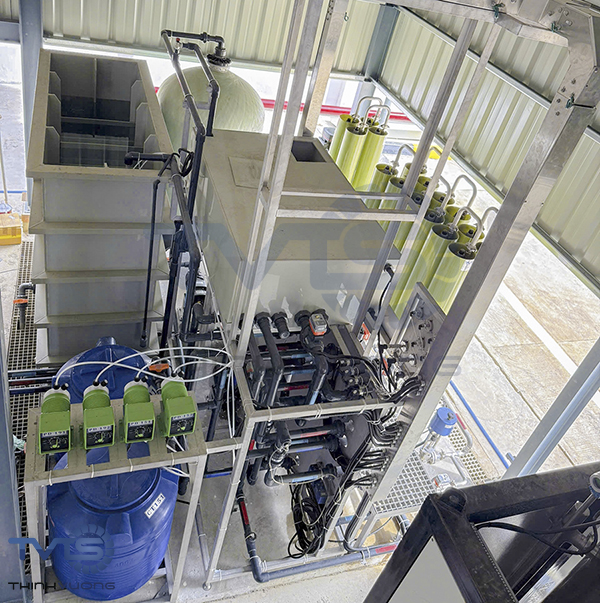
Completed wastewater treatment equipment skid assembled inside the TVTS workshop.
2. Why Does This Approach Deserve Market Attention?
From the plant owner’s perspective, the real concern is not the name of the system. The real question is what practical value it brings. For a Modular Skid-Mounted and Containerized Wastewater Treatment System, that value usually appears in several specific ways.
2.1 Shorter Deployment Time
When the workshop handles most of the work, the project does not need to wait until the site is fully ready before installation begins. The fabrication of integrated skids can proceed in parallel with site preparation. As a result, the total project schedule can be reduced significantly.
2.2 Better Control of Materials, Spare Parts, and Assembly Quality
In the workshop, the team can manage materials, accessories, assembly standards, and technical inspection more effectively than on site. This is especially important for advanced wastewater treatment systems, where installation quality directly affects operating stability.
2.3 Less Pressure on Site Construction
In operating factories, installation space is often limited, the schedule is often tight, and several contractors may work at the same time. When the system is already highly integrated, the amount of on-site work decreases significantly.
2.4 Easier Expansion by Stage
Another advantage is flexibility. When the plant needs more capacity or additional treatment technology, it can expand by process block instead of modifying the entire existing structure. This works well for projects that move from discharge compliance to reuse, concentrate reduction, and eventually to zero liquid discharge.
3. Which Industries Are Suitable for This System?
TVTS develops the Modular Skid-Mounted and Containerized Wastewater Treatment System for projects that require clear engineering, compact implementation, and easier operation control, especially in the following sectors:
- Electroplating and metal surface treatment
- Electronics, components, and printed circuit boards
- Industrial wastewater with complex composition
- Hazardous wastewater
- Landfill leachate
- Waste-to-energy plants
- Chemical manufacturing
- Membrane concentrate streams or wastewater reuse applications
This model is also suitable for membrane-based systems such as:
- Nanofiltration
- Reverse osmosis
- High-load membrane systems
- Reverse osmosis for difficult wastewater
- Membrane bioreactors
- Wastewater reuse systems
- Drinking water production projects that require strict technical configuration and quality control
These projects share several common requirements. They need not only discharge compliance, but also stable operation, controlled fabrication quality, and future expandability.
4. What Does TVTS Want to Bring to the Market?
TVTS is not simply introducing a product with a different physical form. More importantly, we want to introduce a clearer and more structured way to deploy wastewater treatment systems.
When the system is integrated in the workshop, many tasks that were previously scattered across the site become part of one coordinated process. Spare parts and auxiliary materials can be prepared more proactively. Functional units can be checked earlier. The control logic can also be reviewed before shipment.
Once the system arrives at the factory, the remaining work mainly focuses on connection, overall inspection, and operation. From the end user’s point of view, the benefits become quite clear. The plant can understand the investment more easily. The implementation becomes more compact. The start-up phase also becomes more reassuring.
5. Is This the Right Solution for Every Project?
Not necessarily.
For very large projects, or for plants with complex civil structures and heavy dependence on the existing site layout, conventional on-site construction still has its own role. However, for many industrial projects that require fast deployment, block-based capacity, or flexible expansion, the Modular Skid-Mounted and Containerized Wastewater Treatment System is a practical option worth considering.
The key is not to choose a “newer” method. The key is to choose a more suitable one.
6. Why Does This Integrated Model Fit Modern Treatment Technologies?
Today’s treatment technologies can often be configured into integrated skids or modular blocks, including:
- Integrated physicochemical treatment
- Advanced oxidation
- Electrochemical treatment
- Membrane systems
- Evaporation systems
- Crystallization and zero liquid discharge systems
This approach is especially useful when the factory wants to implement the project by treatment objective.
Instead of investing in a broad and scattered way from the beginning, a modular structure helps the plant build a clearer investment roadmap.
TVTS Provides a More Compact and More Stable Modular Treatment Approach
The Modular Skid-Mounted and Containerized Wastewater Treatment System is an approach that deserves more attention in the Vietnamese market. It does not replace every other model, but it introduces a new option: more compact organization, clearer implementation, and greater flexibility in future expansion.
For TVTS, this is a direction we want to continue developing as a practical and technically grounded value. It is not a loud idea. It is a realistic one, and it can create clear results for many industrial plants.